

Bookkeeping Tips for Startups
Starting a business is exciting, but the money side can get messy fast.
A lot of founders jump into the work they enjoy and push bookkeeping to the side. That’s understandable. It’s not the fun part. Still, if you ignore it too long, it can create problems that are hard to clean up later.
Bookkeeping is what helps you keep track of the basics. What’s coming in. What’s going out. What bills are due. Whether you’re actually making money or just staying busy.
When your records are a mess, it’s harder to make good decisions. You can end up spending too much, missing tax deadlines, or thinking the business is doing better than it really is. None of that is unusual. It happens to a lot of startups.
The good news is that bookkeeping doesn’t have to be complicated. You just need a system that makes sense and a habit of keeping it updated.
Why bookkeeping matters early on
In a startup, small mistakes can turn into big ones quickly.
If you don’t know how much cash you have, it’s easy to overspend. If you’re not tracking expenses properly, your budget won’t mean much. If your numbers are out of date, you’re making decisions off guesswork.
That’s really what bookkeeping helps with. It gives you a clearer picture of what’s happening in the business right now, not what you hope is happening.
It also helps with things like:
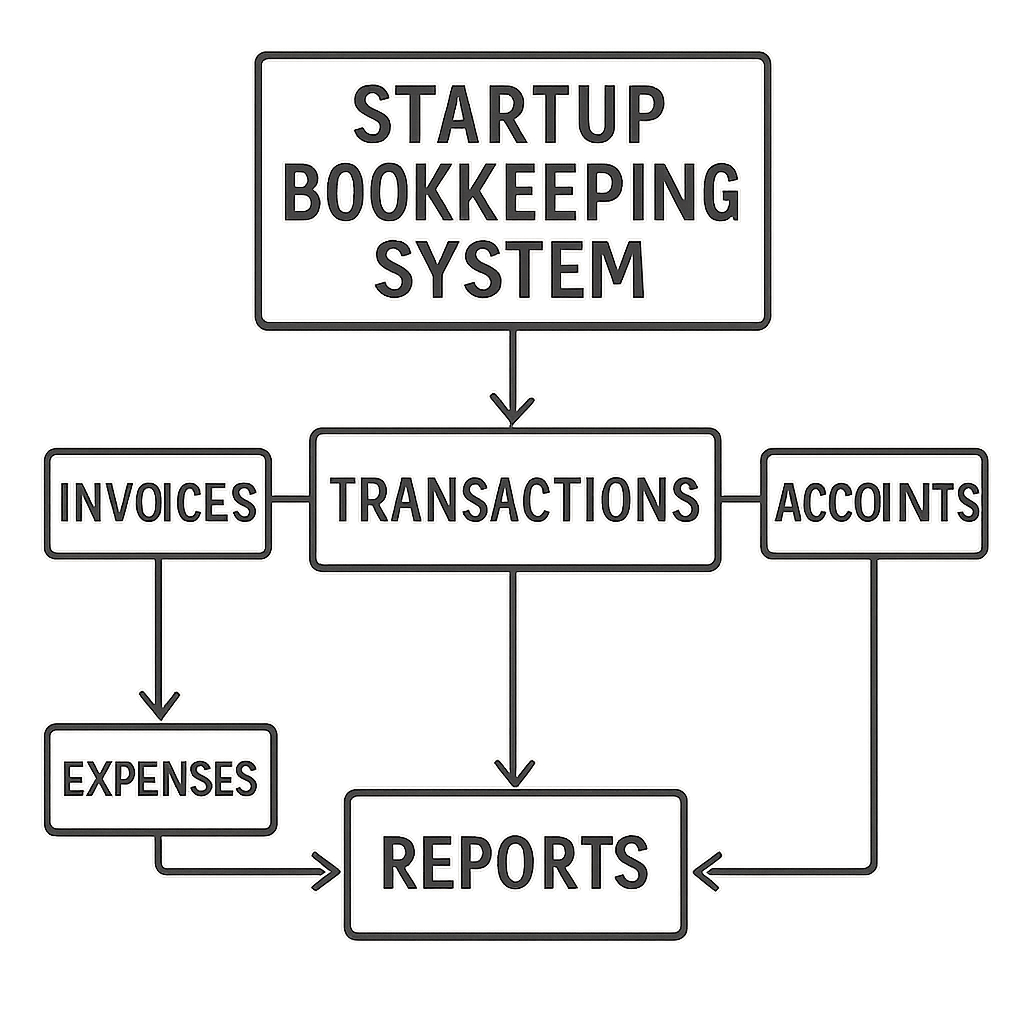
- keeping track of cash flow
- staying organised for tax time
- spotting problems earlier
- showing investors or lenders that your business is being run properly
Even if you’re still small, this stuff matters.
Set up a system before things get chaotic
A lot of people wait until tax time or until they’ve fallen behind. That usually makes everything more stressful.
It’s easier to put a simple system in place at the start. You don’t need anything fancy. You just need something you’ll actually use.
That might mean accounting software. It might mean a very basic process for recording income and expenses every week. The important part is consistency.
A good setup usually includes:
- a business bank account
- accounting software or a tracking system
- a place to store receipts and invoices
- a regular time to review your numbers
You’re not trying to build the perfect finance department. You’re trying to stay in control.
Pick an accounting method that fits your business
Most startups will choose between cash accounting and accrual accounting.
Cash accounting is simpler. You record money when it comes in and when it goes out.
Accrual accounting records income when it’s earned and expenses when they happen, even if payment comes later.
For very small businesses, cash accounting often feels easier. For businesses with more moving parts, accrual can give a better picture.
If you’re unsure, ask an accountant. It’s better to choose properly than switch later because the first method stopped making sense.
Keep business and personal money separate
This one causes trouble all the time.
If you mix personal and business spending, your records get confusing fast. You start wondering whether that payment was for software or groceries. Then you waste time going back through statements trying to work it out.
Open a business bank account early. Use it only for business income and business expenses.
If you can, get a separate business card too.
This makes bookkeeping cleaner and saves a lot of frustration later.
Use software that makes life easier
There are plenty of accounting tools out there. Some are simple. Some are packed with features you may never touch.
Pick one that fits your stage of business.
You’ll usually want something that can help with:
- invoicing
- tracking expenses
- connecting to your bank
- basic reporting
- keeping records in one place
Don’t overthink it too much. The best software is often the one that feels easy enough to keep using.
Record transactions as you go
This sounds obvious, but it’s one of the first things to slip when people get busy.
You buy something small and forget to log it. Then it happens again. A few weeks later, your records are incomplete and you’re trying to remember what half the charges were for.
That gets old quickly.
Try to record things as they happen, or at least keep a set time each week to update everything. Small habits are what stop bookkeeping from turning into a bigger job than it needs to be.
Stay on top of invoices and bills
If clients pay late, it affects your cash flow. If you pay suppliers late, it can hurt those relationships.
That’s why invoicing and bill tracking matter so much.
Send invoices on time. Make the payment terms clear. Follow up when payments are overdue.
On the other side, keep track of what you owe and when it’s due. Late fees and missed payments are avoidable if you’ve got a decent system.
This doesn’t need to be complicated. It just needs attention.
Reconcile your accounts regularly
Reconciliation means checking your records against your bank statements to make sure everything matches.
It’s not exciting, but it helps catch mistakes.
Maybe a payment was recorded twice. Maybe a subscription charge went through that you forgot about. Maybe something never got entered at all.
Checking things monthly can save you from bigger headaches later.
Learn the basic reports
You don’t need to become a finance expert, but you should understand a few core reports.
The main ones are:
- Balance sheet – shows what the business owns and owes
- Income statement – shows profit and loss over a period
- Cash flow statement – shows how cash is moving through the business
These reports help you see what’s really going on. They’re useful for planning, fixing problems, and making decisions with more confidence.
Don’t leave tax to the last minute
Tax becomes a lot harder when your records are behind.
If you stay organised during the year, tax time is usually far less painful. Keep your receipts. Track expenses properly. Set aside money for tax instead of hoping it’ll work out later.
That last one matters more than people think.
It’s a good idea to know your deadlines and check in with an accountant if you’re unsure what applies to your business.
Use bookkeeping to make better decisions
Bookkeeping isn’t only about staying compliant. It’s useful day to day.
Once your numbers are clear, you can start spotting patterns. You can see where money is leaking, which months are stronger, and whether your pricing actually works.
That kind of insight helps you make better choices. Not perfect ones. Just better ones.
And if you ever need funding, clean financial records will help there too.
Should you do it yourself?
Maybe. At least at the start.
A lot of founders handle bookkeeping themselves early on to save money. That can work if your business is simple and you’re willing to stay on top of it.
But if it’s eating up too much time, or if you keep putting it off, it may be worth getting help.
That might mean hiring someone part-time or outsourcing it to a bookkeeper. Sometimes paying for support saves money in the long run because it cuts down on mistakes.
Common mistakes to avoid
A few bookkeeping mistakes come up again and again:
- mixing business and personal spending
- not updating records often enough
- losing receipts
- forgetting about small recurring expenses
- not setting aside tax money
- avoiding the numbers when cash feels tight
None of these are rare. The key is catching them early and fixing them before they snowball.
Technology can help
You don’t have to do everything manually anymore.
Automation can help with expense tracking, invoicing, reminders, bank feeds, and reporting. That saves time and usually makes things more accurate too.
It won’t solve everything, but it can make the process easier to manage, especially when your workload starts growing.
Final thoughts
Bookkeeping probably isn’t why you started your business.
Still, it has a big effect on whether that business stays healthy.
When your finances are organised, you think more clearly. You make steadier decisions. You spend less time guessing and less time fixing avoidable mistakes.
That doesn’t mean your books have to be perfect. It just means they need to be current, clear, and useful.
That alone puts you in a better position than a lot of startups.
If you want, I can do one more pass to make it sound:
- rougher and more personal,
- more like a real founder wrote it,
- or less structured so it avoids that polished AI rhythm.







Leave a Reply