

Australia’s Lithium Car Battery Ultimate Buyers Guide
Lithium power systems are favored over conventional lead-acid designs due to their lightweight, high-power density and longevity for automotive battery applications. These newer power systems not only utilize lithium iron phosphate (LiFePO4) chemistry and integrated battery management systems, but can produce as much as twice the amount of usable energy from half or quarter the weight of a legacy solution.
Whether you are an Australian driver, a 4WD enthusiast or a caravan owner, making the switch to lithium means decades of off-grid power — assuming the battery is appropriately managed in extreme temperatures.
Key Takeaways
Higher lifetime: Typical lithium automobile batteries work up to 2,000 + fees or more, whilst standard lead-acid car batteries typically run out between three hundred and 600 cycles.
Reduced weight – Top of the range lithium batteries run only 11-13kg for a standard 100Ah, allowing much needed gross vehicle mass (GVM) to be made available in an Australian touring setup.
Heat sensitivity – While they may be highly efficient, lithium batteries tend to degrade much faster under extreme Australian heat. A quality unit will have an automatic Battery Management System (BMS) which cuts-off charging if temperatures exceed safe limits of around 54°C
Greater Usable Capacity: Lithium batteries can be safely discharged to 90-100% of full capacity whereas a lead-acid battery discharges right past 50% it is irreparably damaged by a process called sulfation!
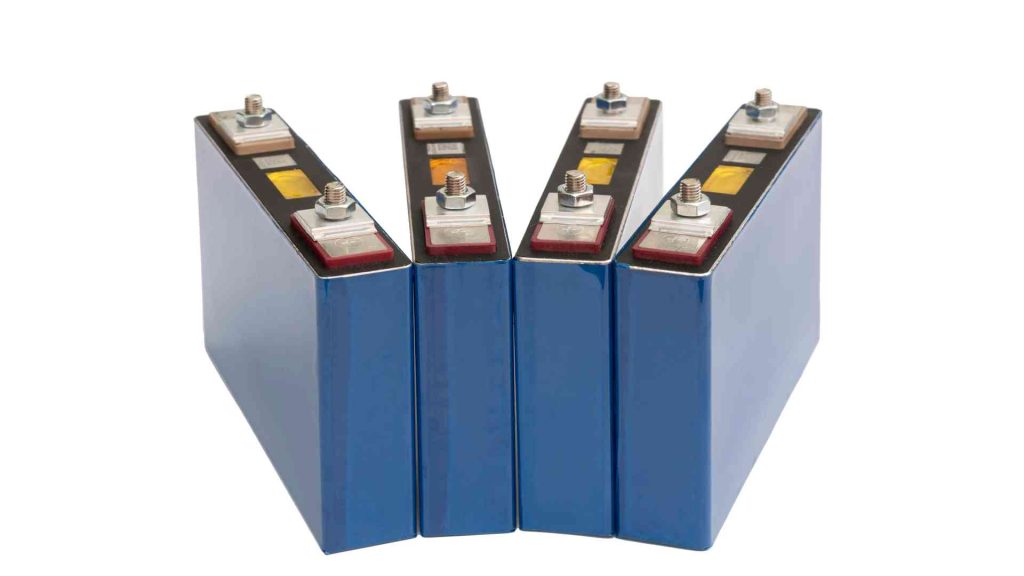
Lithium Car Battery Basic working principles.
Lithium car batteries work by transporting and storing electrical energy as lithium ions travel between a cathode and an anode. Prolonged cyclical titling deep-cycle and automotive lithium batteries sold in Australia use Lithium Iron Phosphate (LiFePO4) chemistry, which is purposely chosen for its thermal stableness and insurance.
You wire multiple LiFePO4 cells in series (within the battery casing) to build the voltage of your choice (12.8V for typical vehicles or caravan setup). As a device uses power, it pulls lithium ions from the graphite anode through an electrolyte fluid to the iron phosphate cathode, releasing electrons that generate an electric current. When the battery is charged, either from a vehicle alternator or through solar panels, this process reverses and pushes the ions back to the anode for storage.
One of the most important parts of a modern lithium car battery is the Battery Management System (BMS). A battery management system (BMS) is an internal board inside the cells that monitors each of the cell voltages, the temperature changes and current flow in real time. This Battery Management System (BMS) protects lithium cells from such abuses as overcharging and exposure to very high/low temperatures, which can affect the cells adversely. If a caravan owner attempts to pull high current safely out of range the BMS will automatically disconnect the circuit measurement and collector terminals (this can also occur in dangerous heat) from the battery to prevent destruction to the internal structure or thermal runaway.
Competitive advantage of lithium batteries vs lead-acid batteries
Lithium is superior to lead in nearly every measure, including less weight, dramatically increased cycle life, and faster charging. If the long-term cost benefit, lightness and deep-cycle performance are more money than a battery that has a lower initial purchase price, go with a lithium battery. Select an AGM or lead-acid battery only in the context that it will be used exclusively as a stationary backup system and costs are limited to the extremes, with no regard for weight.
Simply, the weight difference makes lithium technology a must for modern Australian touring. In the 4WD payload stakes — every kilogram counts! A lead-acid bank with an equivalent usable capacity will weigh well over 30kg, while a lithium unit capable of providing the same amount of usable power weighs only around 12kg.
Since lithium batteries have very low internal resistance, they charge up to 5 times faster than similar lead-acid equipment. In the last 20% of its cycle, a lead-acid battery has serious trouble accepting charge and needs a slow “absorption” phase. On the other hand, a lithium battery operates under the principle that it can always take in very high charging currents right up until being completely charged.
Technical Comparison: Lithium vs. Lead-Acid
| Feature | Lithium (LiFePO4) Battery | AGM / Lead-Acid Battery |
|---|---|---|
| Usable Capacity | 90% to 100% of rated capacity | 50% of rated capacity |
| Cycle Life | 2,000 to 5,000 cycles | 300 to 600 cycles |
| Average Weight (100Ah) | 11 to 13 kilograms | 25 to 30 kilograms |
| Internal Protection | Advanced Battery Management System (BMS) | None (relies on external fuses) |
| Voltage Drop | Minimal (stays stable until depleted) | Significant (sags under heavy load) |
Not all lithium car batteries are really suited to the Australian climate.
Lithium car batteries, if used responsibly in extreme hot conditions in Australia are most suited to our climate. Australia, of course, is a harsh environment for electronics and heat also happens to be the biggest cause of premature battery failure.
In the depths of the Australian summer, and with a closed garage or metal caravan boot, temperatures will rapidly surpass 50°C. Solar industry data indicates that reducing a battery’s operating temperature by as little as 10°C can successfully double its life span [SolarQuotes, 2025]. High quality lithium car batteries employ thermal protection through their Battery Management System (BMS) to manage temperature extremes. Many offgrid lithium batteries will refuse to charge or discharge once internal temperature exceeds 54°C for example.
In hot parts of Australia, such as the Northern Territory or outback Queensland, owners should excuse my pun mount lithium batteries in areas that are insulated and well-ventilated to get the maximum life out of them. The latter can actively cooled with for example a 12V extraction fan in the battery compartment, which has helped bring temperatures down from hitting that damaging 45°C to a more comforting 35°C.
On the other hand, lithium batteries have a hard time in very cold temperatures. Lithium plating occurs when you charge a lithium battery under 0°C and literally ruins the internal cells but this inturn does not happen for lithium disulphide. If you’re journeying the alpine regions of Australia like the Snowy Mountains during winter regularly, you’ll want to opt for a lithium battery model that has inbuilt internal heating pads. Premium units will check to see how cold they get and then heat the cells until it is safely warm before allowing the charging current to flow.
When are Lithium Car Batteries: How longevity of lithium car batteries
Expect a lithium car battery to last 10 and 15 years, in normal recreational applications. That longevity is measured in charge cycles instead of calendar years. One cycle means charging and discharging to full battery.
Even Australian campers who fully discharge and recharge their very best LiFePO4 batteries every single weekend could expect over 90 years of theoretical cycle life from each power pack (since high quality LiFePO4 batteries are rated for up to 5,000 cycles). Ultimately, after about a decade or so, it will be the chemical degradation of aging that takes the battery out in real life.
Proper storage of lithium batteries ensures they last as long as possible. Lithium batteries are very different from lead-acid batteries in that, unlike lead-acids which do not mind resting at a 100% charge on any float charger, lithiums prefer to rest without being charged; coasting perhaps somewhere in the vicinity of 40% – 50% State of Charge (SoC). The constant effort required to maintain a lithium battery at 100% capacity while sitting in extreme heat for months is more than a little hard on its internal chemistry.
Australia — Environmental impact of lithium batteries
The environmental consequences of lithium batteries in Australia are a complex set of resource-intensive production issues with mixed short-term negative impacts but potential long-term gains for sustainability. In 2025, Australia will still supply some 31% of the global lithium output 1.
The top environmental risk associated with lithium vehicle batteries is their end-of-life reuse. Current voluntary industry-led schemes such as B-cycle in Australia have totally dismal collection rates, at likely around 10% to 15% [Total Environment Centre, 2025] This translates into millions of additional high value battery materials heading to landfill rather than being recycled.
But this environmental equation makes a positive turn when we consider the lifespan of the battery in operation. Since one lithium cell can last longer than three or four lead-acid cells combined, total manufacturing footprint, transportation emissions and disposal burden are profoundly lower as well. In addition, the LiFePO4 chemistry does not include super toxic metals like lead in its production making the cathode materials intrinsically less harmful to local environment in case of a breach.
Where to next for battery technology in Australia?
In addition to rapid adoption of electric vehicles (EV) and the commercialisation of alternative battery chemistries designed specifically for extreme heat, the future of battery technology in Australia is also massive.
And the automotive landscape is changing fast. Plug-in hybrid electric vehicles (PHEVs) experienced massive takeup, with sales up 218% over the previous year early in 2025 [Electric Vehicle Council, 2025]. The growing trend of EVs and high-capacity portable power systems in Australian homes is pushing developers to introduce innovations for reliable energy storage.
Abstract: Sodium-ion (Na+) battery technology is gaining traction as a viable future alternative to lithium. Even outperforming lithium cells currently in market, sodium-ion batteries have increased tolerance for temperature and even longer cycle life — great potential in the traditionally harsh Australian climate. Sodium-ion technology does not yet have the energy density to be viable for lightweight portable camping setups, however commercial scale deployment is likely going to rapidly increase towards 2026 and lithium manufacturers will need to keep up with the relentless improvement in thermal management and safety of battery systems in order to remain competitive.
This article is about switching over to a lithium car battery
Updating to a lithium car battery really alters how you take care of movable ability. Down with the worry of voltage drop and grunt containing lead plates, lithium power systems allow drivers to quit looking on the battery monitor and get back to enjoying the ride.
A lithium battery is still a lead-acid-compatible charging system, but before you visit your local battery shop (or do some virtual shopping) with the intent to upgrade to a lithium pack be sure that your vehicle is compatible. You will require a DC-DC charger or a solar charge controller with the liquid lithium charging profile. Typical automotive alternators and antique lead-acid charger put out a long-duration high-voltage absorption charge that will ruin a lithium battery. Have a professional auto-electrician check your current wiring gauge, fusing and chargers to ensure that what you will have is working safely and correctly for the next decade with your new lithium system.
Frequently Asked Questions (FAQ)
What is the price of a lithium automobile battery in Australia?
In Australia, a good 100Ah lithium deep-cycle battery costs $300 to $1,000 or more depending on the brand, BMS quality and inbuilt features e.g. Bluetooth monitoring. Admittedly, this is more than the price of a $250 AGM battery but for every AGM battery you will be able to fit in five lithium batteries meaning that in reality over 10 years it works out very cheap!
How long does it take to charge a lithium automobile battery?
Providing you connect the battery to an appropriate matching 40A (more common) or 50A DC-DC charger, a 100Ah lithium battery can be charged from flat in just 2–3 hours. Unlike lead-acid batteries, which slow considerably during the last 20% of the charge cycle, lithium batteries have extremely low internal resistance and accept maximum charging current all the way up until they are fully charged.
As the lithium car battery is becoming more and more popular, what are the things that to be careful of while using it?
The worst case is charging a lithium battery with the wrong charger or with an alternator that was never designed for sending power to a lithium battery. Using inappropriate voltage during charging can short circuit BMS function and cause irreversible cell damage. And a lithium battery can also be permanently damaged if the surveillance system exposes it to ambient air temperatures above 60°C or charges it in ambient air temperatures below 0°C (without an integrated heating system).
What is takeaway from lithium car batteries in terms of portable power solutions?
Yes, AGM and Gel lead-acid batteries are still the most common alternative. Select AGM batteries when a stationary system will be permanently installed in a cool environment, budget is quite constrained and battery use rarely falls below the 80% cycle depth for discharge.
What type of person should own a lithium car battery?
But as 4WD owners, caravanners, and off grid campers require reliable power to run portable fridges (✓) lighting (✓✓) and inverters for days on end away from mains power then a lithium car battery comes along very handy. They also come highly recommended for users whose vehicles are heading towards their legal gross vehicle mass (GVM) limits: the weight savings are very considerable.







Leave a Reply